How do signalling networks encode and control cell shape?
Cell shape is both an output and an input to signalling networks. We investigate how biochemical pathways and mechanical cues are integrated to produce distinct morphological states and how those states influence downstream decisions in cancer cells.
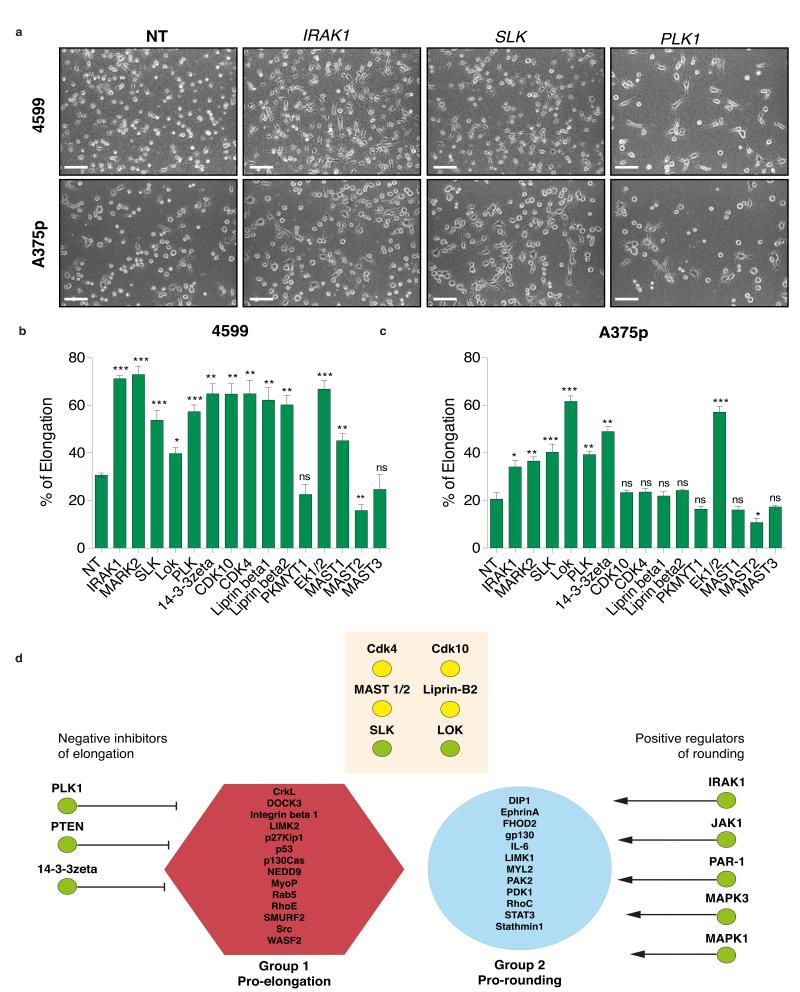
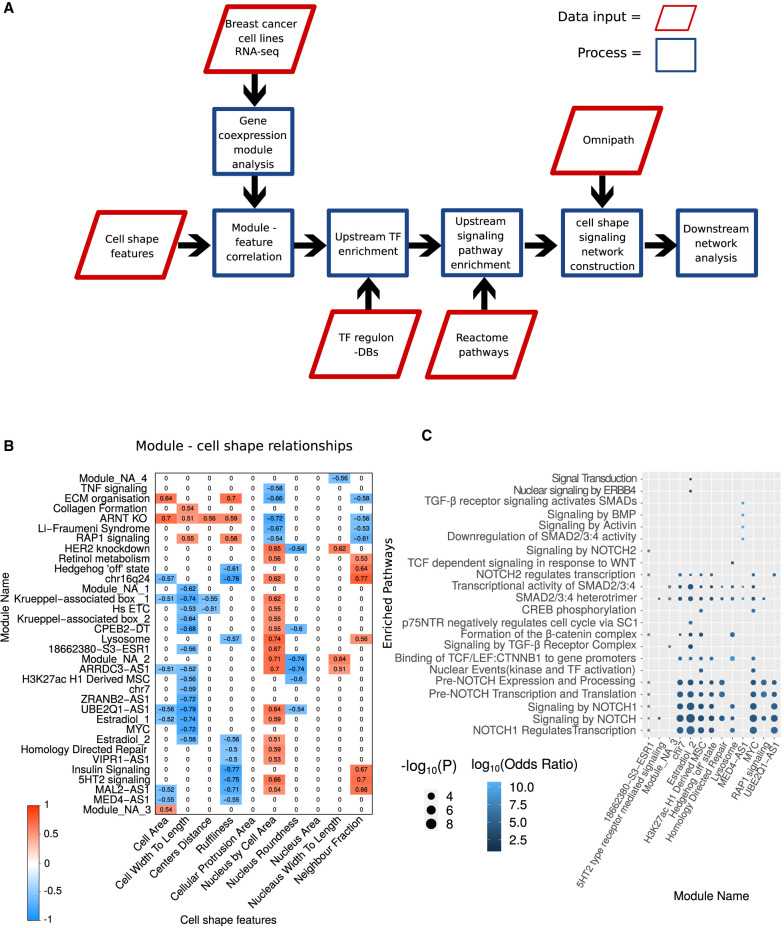
Cell morphology reflects underlying signalling states: by quantifying shape we can infer pathway activity and regulatory interactions at scale. We use multiparametric single‑cell measurements from high‑content imaging combined with functional perturbations to reconstruct phenotype‑to‑network maps.
We study how changes in extracellular matrix, adhesion and cytoskeletal regulators reconfigure signalling modules (for example RAP1 and NF‑κB) and bias cells toward migratory, proliferative or drug‑tolerant states. Translating these mappings to human cancer datasets helps prioritise candidate regulators for functional validation.